How Food Pairings Can Stabilize Your Energy

The Science of the Spike and Crash
When you consume carbohydrates, especially refined ones, your body breaks them down into glucose, causing your blood sugar to rise. Foods are ranked on a Glycemic Index (GI) scale from 0 to 100 based on how quickly they raise blood glucose. For reference, pure glucose is 100. A food like a plain white bagel can have a GI as high as 72, triggering a rapid release of insulin to shuttle that sugar out of your bloodstream. This insulin overcorrection is what causes the subsequent 'crash,' leaving you tired and reaching for more sugar.
The Power Trio: Protein, Fat, and Fiber
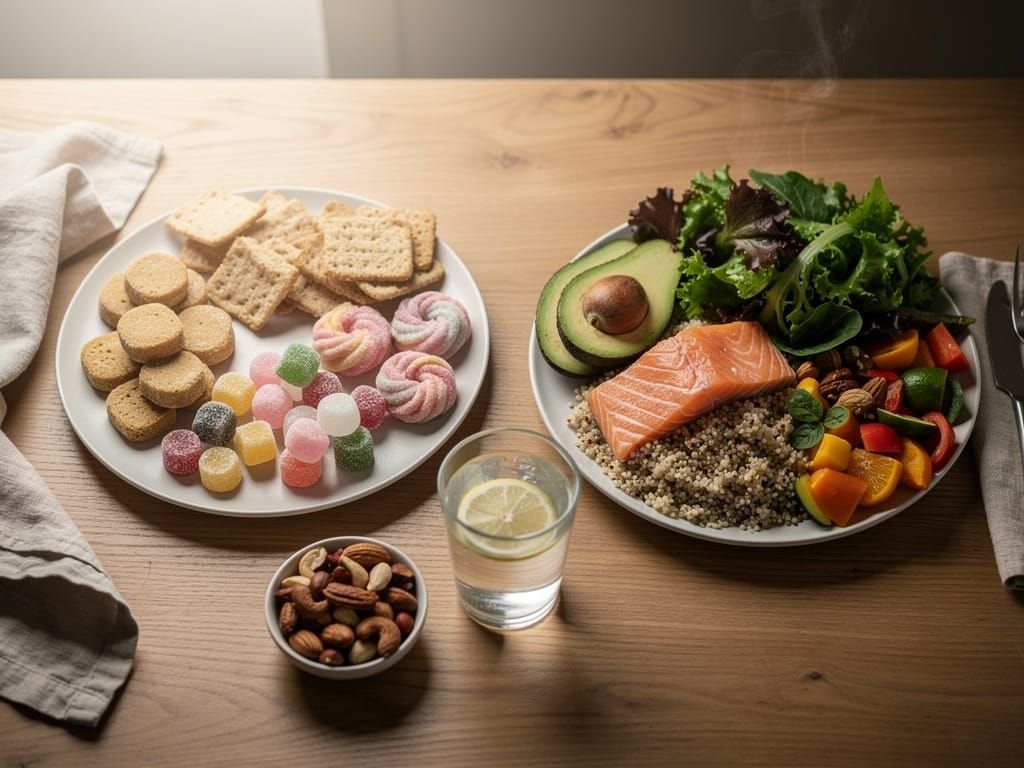
The antidote to the glucose rollercoaster is to never let a carbohydrate travel alone. Pairing it with protein, healthy fats, or fiber dramatically slows down digestion and the rate at which sugar enters your bloodstream. Research from the University of Missouri shows that a high-protein breakfast containing 35 grams of protein prevents gains in body fat and reduces daily hunger compared to a standard breakfast. This is because protein is a master of satiety and metabolic regulation.
Healthy fats and fiber play equally important roles. Adding just half an avocado to a lunch meal was shown in one study to increase satisfaction by 23% and reduce the desire to eat over the next five hours. Fiber, particularly soluble fiber, creates a gel-like substance in the digestive tract that physically slows glucose absorption. The average American adult only consumes about 15 grams of fiber per day, far short of the recommended 25-38 grams that support stable blood sugar and overall health.
Data-Driven Pairings for All-Day Energy
Applying this principle is straightforward. The goal is to buffer the metabolic impact of carbohydrates with stabilizing partners. By building meals this way, you create a slow-release energy curve instead of a sharp spike. Here are a few evidence-based combinations:
- Apple with Almond Butter: An apple has a low GI of around 36, but pairing it with two tablespoons of almond butter adds nearly 7 grams of protein and 16 grams of healthy fats to ensure a minimal blood sugar impact.
- Oats with Walnuts: The beta-glucan soluble fiber in oats is already a blood sugar stabilizer. Adding a one-ounce serving of walnuts not only provides healthy fats but has also been shown to improve blood vessel function by over 60% within hours of eating.
- Greek Yogurt with Berries: A cup of plain Greek yogurt can pack over 20 grams of protein. Combining this with antioxidant-rich berries, which are high in fiber, creates a nutrient-dense meal that supports steady energy for hours.
- Chickpeas and Olive Oil: Chickpeas are a fantastic source of both plant-based protein and fiber, with about 15 grams of protein and 13 grams of fiber per cup. Drizzling them with olive oil adds heart-healthy monounsaturated fats, further slowing digestion.
Beyond the Plate: Timing and Hydration
While pairings are paramount, consistency matters. Allowing more than 4-5 hours to pass between meals can sometimes lead to low blood sugar, which triggers cravings for fast-acting sugary foods. Consistent meal timing helps prevent this reactive eating. Furthermore, hydration is a non-negotiable part of the energy equation. Clinical studies confirm that being dehydrated by just 2% of your body weight can significantly impair cognitive functions like attention, memory, and motor coordination.
Mastering your energy levels is about metabolic management, not deprivation. The data is clear: carbohydrates are not the enemy, but consuming them in isolation can set you up for a cycle of fatigue. By focusing on smart combinations, you are working with your body's biology. Adding protein, fat, and fiber to every meal and snack is the most effective strategy for blunting glucose spikes, extending satiety, and building a foundation for consistent, reliable energy.
The application is simple. Before you eat, look at your plate and ask a direct question: 'Where is my protein, fat, or fiber?' If a carbohydrate-rich food is sitting by itself, find it a partner. This single habit - adding a handful of nuts to your fruit, a slice of avocado to your toast, or beans to your rice - requires minimal effort but delivers a massive return. It is the data-backed method for trading erratic energy swings for steady, all-day performance.
 Aran Jahmal
 Aran Jahmal
 Aran Jahmal