Why Eating the Rainbow Isn't Just a Cliché

You've heard the advice a thousand times: 'Eat the rainbow.' It's a catchy phrase, often repeated by health experts, dietitians, and well-meaning relatives. But have you ever stopped to question what it really means? Is it just a simple way to get kids to eat their vegetables, or is there a deeper, more scientific reason behind this colorful command? It's time to investigate why this saying is far more than just a tired cliché.
So, what does 'eating the rainbow' actually mean?
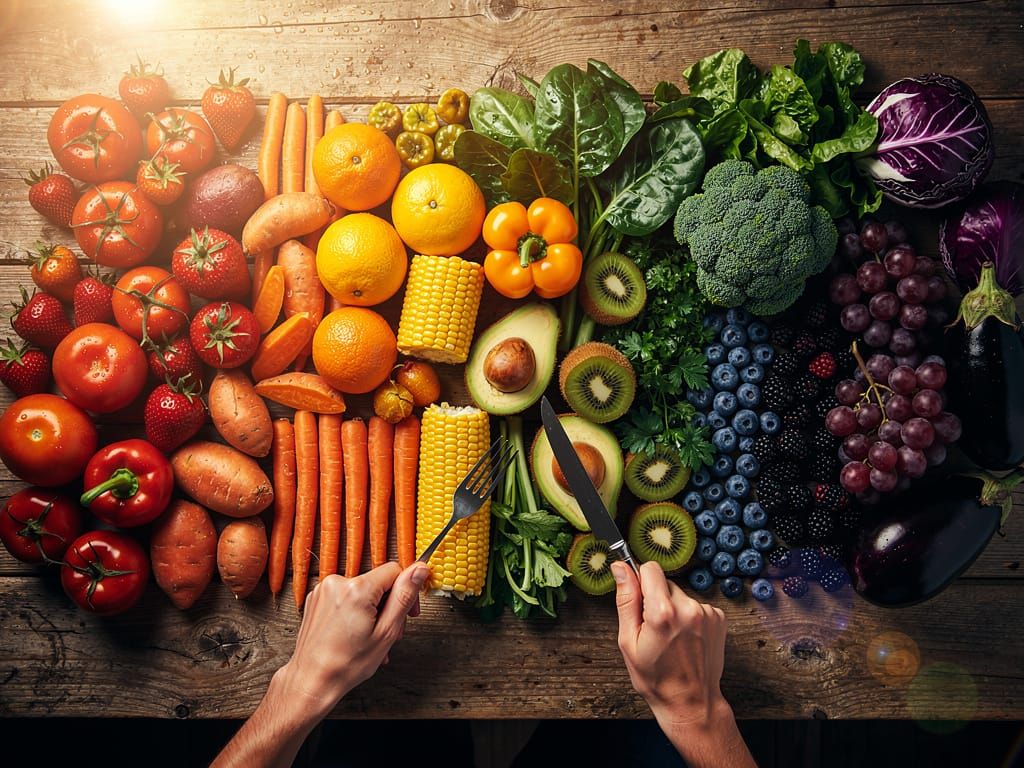
Let's be clear. This isn't a license to indulge in artificially colored candies and cereals. 'Eating the rainbow' refers to consuming a wide variety of naturally vibrant fruits and vegetables. Each color you see in the produce aisle-from the deep purple of an eggplant to the bright orange of a carrot-signifies the presence of distinct compounds called phytonutrients. These are natural chemicals produced by plants to protect themselves from stressors like germs, fungi, and insects.
When we consume these plants, we get to borrow their protective benefits. A plate filled with different colors is a visual indicator that you're getting a broad spectrum of these powerful compounds. It's a simple strategy to diversify your nutrient intake beyond just basic vitamins and minerals, tapping into a more complex network of plant-based protection that supports your body's functions on a cellular level.
Why are these different colors so important for my body?
What's the real difference between a red bell pepper and a yellow one? The answer lies in their unique phytonutrient profiles. Each color group offers specific health advantages. For instance, red foods like tomatoes and watermelon are rich in lycopene, an antioxidant known for supporting heart health. Orange and yellow foods, such as sweet potatoes and lemons, are packed with carotenoids, which are famous for protecting vision and supporting a healthy immune system.
The benefits continue across the spectrum. Green vegetables like spinach and kale provide lutein and zeaxanthin, which help protect our eyes from damage, along with chlorophyll for detoxification. Blue and purple foods, including blueberries and red cabbage, get their hue from anthocyanins, powerful compounds linked to improved brain function and antioxidant activity. Even white and brown produce like garlic, onions, and mushrooms contain unique phytonutrients such as allicin, which has potent immune-supporting properties. By eating a variety, you ensure your body gets access to this entire arsenal of protective nutrients.
Can't I just take a multivitamin instead?
It's a fair question. Why go through the trouble of sourcing and preparing a variety of produce when you can just pop a pill? The truth is, a supplement cannot replicate the intricate benefits of whole foods. The thousands of phytonutrients, fibers, and enzymes found in a single piece of fruit or a vegetable work together in a process called food synergy. This means that these components, when consumed together in their natural form, provide a greater health benefit than the sum of their individual parts.
A multivitamin provides isolated nutrients, often in synthetic forms, completely missing the complex interplay found in nature. A carrot, for example, offers beta-carotene alongside fiber, vitamin K, potassium, and dozens of other compounds that help your body absorb and use everything effectively. You simply cannot bottle that kind of nutritional teamwork. Supplements can be useful for filling specific gaps, but they should never be seen as a substitute for a colorful, whole-food diet.
How can I realistically add more color to my meals?
Does this mean every meal needs to look like a seven-color work of art? Absolutely not. The goal is progress, not perfection. The most effective approach is to make small, consistent changes. Start by looking at your current meals and asking where you can add a new color. Could your morning oatmeal use a handful of blue or red berries? Could your lunch sandwich benefit from some dark green spinach or sliced red onion?
Think about additions rather than subtractions. A simple side salad can add two or three different colors to your dinner. Roasting a large batch of mixed vegetables-like broccoli, bell peppers, and sweet potatoes-at the start of the week gives you an easy, colorful addition to any meal. Challenge yourself to pick up one new, interesting fruit or vegetable each time you go to the grocery store. Making it a habit to seek out color will naturally diversify your diet and, in turn, your nutrient intake, transforming a simple cliché into a powerful tool for well-being.