Why Healthy Fats Belong in Every Fitness Meal Plan

Let me guess - somewhere along the way, someone told you that fat was the enemy. Maybe it was a magazine, a well-meaning gym buddy, or just the general noise of diet culture that's been swirling around for decades. And so you cut it out. You went low-fat, no-fat, anything-but-fat. And yet, something still felt off.
Here's the truth: fat was never your enemy. The wrong kinds of fat, eaten in excess, can cause problems - sure. But healthy fats? They're one of the most powerful tools you can put in your fitness meal plan, and most people are still sleeping on them.
Your Body Actually Needs Fat to Function
I know that sounds counterintuitive, especially if you've spent years trying to avoid it. But your body is genuinely built to run on healthy fats. Every single cell membrane in your body contains fat. Your brain is nearly 60% fat by dry weight. Your hormones - including the ones that regulate muscle growth and recovery - are synthesized from fat.
When you strip fat from your diet, you're not just cutting calories. You're cutting the raw material your body needs to repair muscle tissue, regulate inflammation, and keep your energy steady through a tough workout. That post-gym crash you've been blaming on carbs? It might actually be a fat deficiency talking.
The Fat-Muscle Connection Nobody Talks About Enough
Here's where it gets really interesting for anyone who's serious about fitness. Omega-3 fatty acids - found in foods like salmon, walnuts, flaxseeds, and chia seeds - have been shown to support muscle protein synthesis. That's the process your body uses to actually build and repair muscle after training.
Think about that for a second. The very thing you've been avoiding might be slowing down your gains.
Beyond muscle building, healthy fats help your body absorb fat-soluble vitamins - specifically vitamins A, D, E, and K. If you're eating a colorful plate of vegetables but skipping the olive oil drizzle or the handful of almonds, you could be missing out on a big chunk of those nutrients. They literally need fat to get where they're going in your body.
Sustained Energy Without the Crash
One of the biggest reasons I love recommending healthy fats to anyone building a fitness routine is what they do for your energy levels. Fat is a slow-burning fuel source. Unlike simple carbohydrates that spike your blood sugar and then drop it just as fast, fats provide a long, steady release of energy.
That means fewer cravings mid-morning, more mental clarity during your afternoon workout, and a much easier time sticking to your meal plan without feeling deprived. It's not magic - it's just how your metabolism works when you give it the right building blocks.
And let's be honest: a meal plan you can actually stick to is worth ten times more than a perfect one you abandon by Wednesday.
The Best Healthy Fats to Add to Your Plate
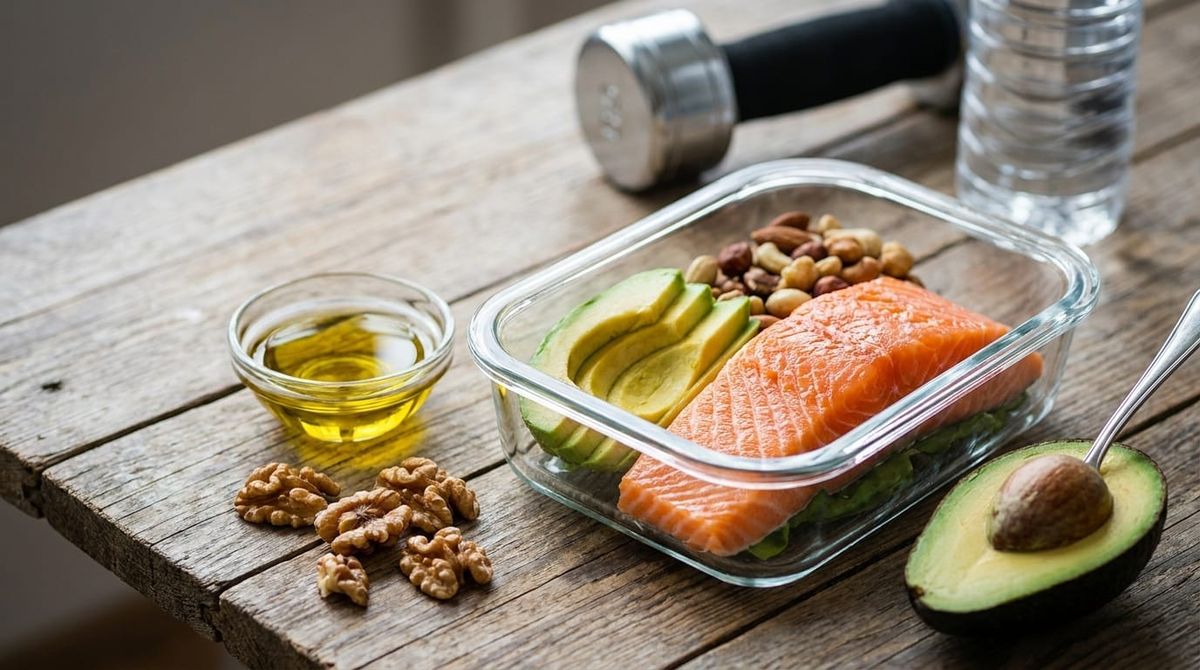
You don't need to overhaul everything at once. Start simple. Avocados are an easy win - slice one over your eggs in the morning or mash it into a post-workout bowl. Extra virgin olive oil is one of the most well-studied fats on the planet, and drizzling it over roasted vegetables or using it as a salad base is effortless.
Fatty fish like salmon, sardines, and mackerel give you a powerful hit of omega-3s alongside high-quality protein - a genuinely hard combination to beat for a fitness meal. Nuts and seeds - think walnuts, almonds, hemp seeds, and flaxseeds - are portable, satisfying, and incredibly nutrient-dense.
The goal isn't to eat fat for the sake of it. It's to replace the processed, refined stuff with whole-food sources that your body actually knows what to do with.
A Small Shift That Makes a Big Difference
If you're building or refining your fitness meal plan right now, I'd encourage you to stop thinking about fat as something to manage or minimize. Start thinking of it as a performance nutrient - one that supports your recovery, your hormones, your energy, and your long-term relationship with food.
You don't have to go all-in overnight. Add half an avocado to your lunch this week. Swap your low-fat dressing for a simple olive oil and lemon squeeze. Toss a small handful of walnuts into your afternoon snack. Small, consistent shifts like these tend to compound in ways that feel genuinely surprising after a few weeks.
Your body has been waiting for this. Give it the good stuff, and it'll show you exactly what it can do.