How Much Protein Do You Really Need Every Day?

If your calendar is a battlefield, you don’t need a "workout plan." You need an Operating System.
1. The New Gold Standard: The "Ideal Body Weight" Rule
Total protein needs aren't just about how much you weigh; they are about how much lean mass you have or want to have.
- The Baseline: 1.2g to 1.5g per kilogram of body weight (0.5g to 0.7g per pound). This is for the "sedentary but health-conscious" individual.
- The Optimal Range: 1.6g to 2.2g per kilogram of body weight (0.8gto 1.0g per pound). This is the "sweet spot" for anyone lifting weights, practicing Pilates, or looking to lose body fat while keeping muscle.
The Math: If your goal weight is 70kg, your daily protein target looks like this:
70kg x 1.6g = 112g of protein per day}
2. Why Your Age Changes the Math
As we age, our bodies become less efficient at processing protein—a condition called Anabolic Resistance. In 2026, the medical community recommends that adults over 50 actually increase their protein intake compared to their younger counterparts. To trigger Muscle Protein Synthesis (MPS), an older adult needs a larger "bolus" (dose) of protein in a single sitting to hit the Leucine Threshold.
- Under 40: You can "get away" with 15g to 20g per meal.
- Over 50: You need 30g to 40g per meal to "flip the switch" for muscle repair.
3. Protein Distribution: The "Bolus" Strategy
In the past, we thought the body could only "absorb" 30g of protein at a time. This was a misunderstanding. While your gut can absorb almost any amount, your muscles can only use a certain amount for repair at one time.
- The 2026 Strategy: Don't eat 10g of protein six times a day. You’ll never hit the threshold to build muscle.
- The Habit: Aim for 3 to 4 "protein anchors" throughout the day—meals that contain at least 30g to 40g of high-quality protein.
Meal Time | Protein Target | Example |
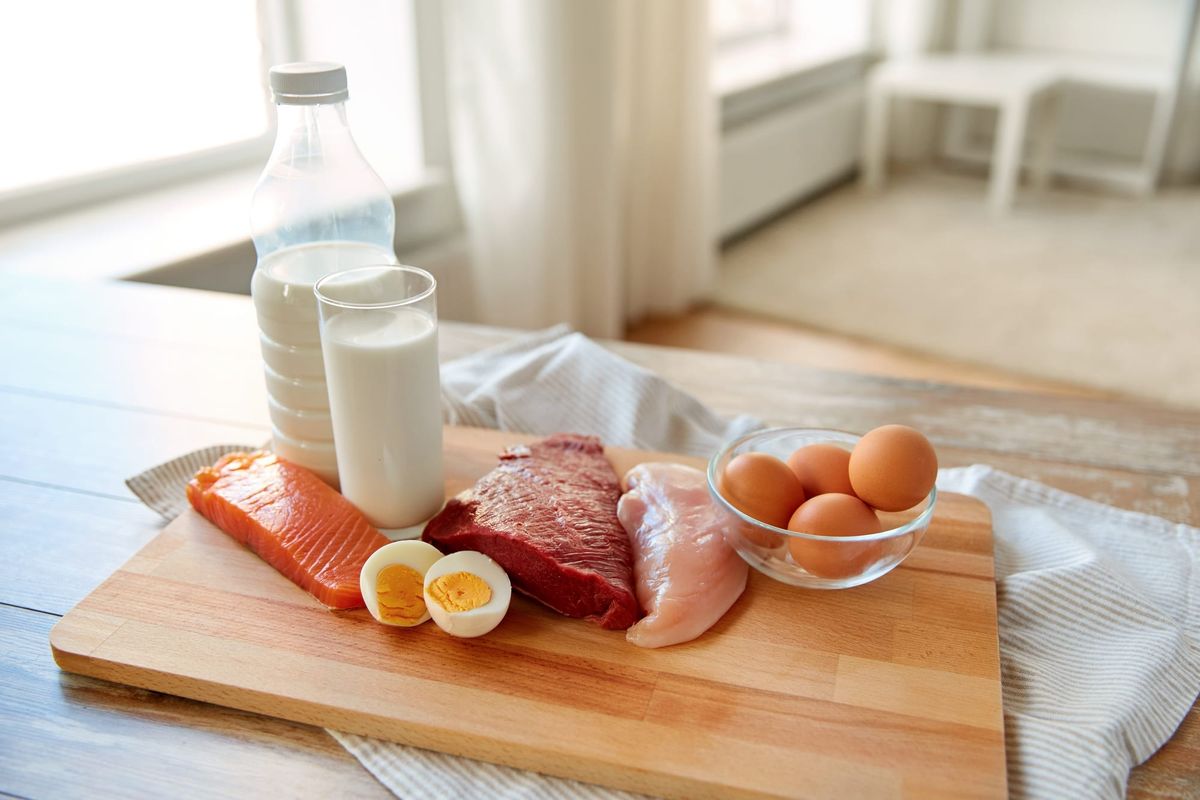
Breakfast | 35g | 4 eggs or a high-quality whey/pea shake |
Lunch | 35g | 150g Chicken breast or Tempeh |
Snack | 15g | Greek yogurt or beef jerky |
Dinner | 40g | Salmon fillet or lean steak |
4. Correcting the "Kidney Myth"
Let’s clear this up once and for all: High protein intake does not damage healthy kidneys. This is one of the most persistent pieces of misinformation in nutrition. While people with pre-existing chronic kidney disease need to manage protein, for the healthy population, the kidneys are remarkably adaptable. In fact, higher protein intake often leads to better blood sugar control, which actually protects kidney function in the long run.
5. The "Thermic Effect" of Protein
If your goal is fat loss, protein is your best friend. Protein has the highest Thermic Effect of Food (TEF).
- Fat/Carbs: Your body uses about 5–10% of the energy in the food to digest it.
- Protein: Your body uses 20–30% of the calories just to break the protein down.
When you eat 100 calories of steak, your body only "keeps" about 70 of them. This is why high-protein diets are so effective for weight management—they literally burn more calories while you're sitting on the couch.
The Verdict
Protein isn't just for bodybuilders; it is the building block of your immune system, your hormones, your skin, and your longevity. If you are feeling tired, hungry, or soft around the middle, the first question you should ask is: "Am I hitting my 1.6g/kg?"
Want to take better care of your health one simple habit at a time? Subscribe to Whole Wellness Wave and get practical tips on nutrition, supplements, fitness, and everyday wellness straight to your inbox.